


17 Jul Step-by-Step Guide to Importing Capsule Houses from China
You can learn how to import capsule houses from China by following clear steps. First, decide what you need and look at different models. Check if each supplier is legitimate and has the right certificates. Plan how you will ship the house and prepare for customs. Adhering to the law, verifying suppliers, and planning shipping help you avoid significant mistakes.
Many buyers make mistakes that cause delays or increase costs. See the table below for common mistakes:
Mistake | Description |
|---|---|
Only Comparing Factory Prices | A low price might indicate weak materials, missing parts, poor waterproofing, or insufficient electrical work. |
Ignoring Local Approval Requirements | This is very risky in Australia, the United States, New Zealand, and some areas in Europe. |
Not Confirming Electrical and Plumbing Standards | The house might arrive with the wrong setup for your country. |
Not Asking What Is Pre-Installed | Some buyers assume everything is included, but what you receive can vary by supplier and product type. |
Not Confirming Packing Plan and Loading Quantity | How you pack and load affects the actual cost to get the house. |
Waiting Too Late to Prepare Customs Documents | Small mistakes in paperwork can lead to significant delays. |
Not Checking Site Conditions | Factors like access, crane space, slope, and foundation are crucial for setting up the house. |
Expecting It to Perform Like a Traditional Building in Every Way | A capsule house is a useful modular product, but it is not the same as a conventional building in every aspect. |
Problems can also arise during shipping and when setting up the house. Refer to the table below for main risks:
Risk Type | Description |
|---|---|
International shipping damage | Damage can occur while the house is in transit. |
Port handling accidents | Accidents can happen when moving the house at the port. |
Inland transport incidents | Issues can arise when transporting the house from the port to the site. |
Crane lift failures | There are risks involved when lifting the house into place. |
Installation errors | Mistakes can occur during the setup of the house. |
Guest and operational liabilities | Problems can arise when people use the house. |
If you follow these steps, you can avoid mistakes and risks when learning how to import capsule houses from China.
Key Takeaways
Make sure you know what you need before you begin. Decide on the size, design, and features you want in your capsule house.
Look up different suppliers and compare them. Check if they are real, have good quality, and help customers well. This helps you avoid expensive problems.
Make sure you follow local rules and safety laws. Ask for the right certificates so you do not get into legal trouble.
Plan how you will ship your capsule house. Pick the best way to ship and get marine cargo insurance. This keeps your money safe.
Check the quality before you ship. Look at the house to make sure it matches your order and is safe.
How to Import Capsule Houses from China: Initial Steps
 Define Your Needs
 Define Your Needs
First, think about what you want in your capsule house. Decide the size, design, and features that fit your project. You also need to think about your budget. Pick the place where you will put the house. Here are some things you should remember:
Look at many models and see what they offer.
Think if you want any special changes.
Learn about local laws and permit rules.
Check your money plan and how you will pay.
Get ready to sign clear deals and keep all papers.
When you know what you need, you make fewer mistakes. It is also easier to tell suppliers what you want when you ask how to import capsule houses from China.
Research Capsule House Models
There are many kinds of capsule houses from China. Each company has its own models and styles. Use the table below to see some popular choices:
Manufacturer | Models Offered |
|---|---|
Etong (Liaoning Yitong Intelligent) | ME, E, T, F (and MK) series; cylindrical and flat-roof pods; modular options |
SUNJ House | Space capsule houses, apple-shaped cabins, futuristic pods (Starry Sky, Starship series) |
Guose Group | Capsule houses, apple cabins, themed units for parks and resorts |
Vessel (303 Vessel) | GEN5 and GEN6 series; luxury capsule homes resembling mini spacecraft |
Qingzhou Vessel Housing Technology | Capsule houses, apple-shaped cabins, container-based restaurants |
Liansheng | Capsule houses, apple cabins, foldable houses, prefab tiny homes |
Rover Capsule House | Capsule houses, modular resort suites, larger multi-room modules |
Yinhong Mobile House | Capsule houses, apple cabins, modular buildings for commercial and residential needs |
Take your time to look at these models. This helps you know what you can get before you go on with how to import capsule houses from China.
Compare Suppliers
Once you know what you want and which models you like, compare suppliers. Use these tips to help you pick the best one:
See if the supplier tells you about materials and quality.
Check if they have good customer service and warranty.
Ask if they can make special sizes or features.
Find out how fast they build and deliver.
Make sure they have certificates like CE or ISO.
Ask how they pack and ship the houses.
See if they help with setup and project work.
Pick a supplier that fits your project.
Comparing suppliers helps you avoid trouble. It also makes how to import capsule houses from China much easier.
Supplier Selection & Compliance
Verify Supplier Legitimacy
 Verify Supplier Legitimacy
You should check if a supplier is real before you pay them or sign anything. Some buyers lose money because they trust fake companies. You can stay safe by knowing warning signs and checking the factory. Always ask for a business license and see if the company has a real factory. You can use maps or watch video tours to see where the factory is. Badges on B2B websites can help you find trusted sellers. Try ordering a small amount first to test the supplier.
Here is a table that shows good ways to check if a supplier is real:
Method | Description |
|---|---|
Verified Supplier Badges | Look for badges on B2B sites to check if they are real. |
Business License Copies | Ask for copies to make sure the supplier is legal. |
Confirm Factory Location | Use maps or videos to see if the factory is real. |
Tip: Use a checklist to check the factory before you send money. Look at licenses, ask for proof, get samples, and write contracts. Place a small order first to build trust.
Check Certifications & Standards
You need to make sure the capsule house follows your country’s rules. Every country has its own rules for safety, quality, and electrical work. Ask the supplier for certificates like CE, ISO, SAA, or UL. These show the house is safe and allowed. If you skip this, you might not be able to use the house or get insurance.
Here is a table of common certificates for capsule houses:
Certification | Coverage | Key Markets |
|---|---|---|
CE (EN 1090) | Steel structure compliance | EU 27 countries |
ISO 9001:2015 | Quality management | Global |
SAA | Electrical safety | Australia / NZ |
UL | Electrical component safety | North America |
CQC | Electrical device certification | China + export |
CSI | Safety glass | Australia |
You also need to check if the house follows local building codes. In the United States, capsule houses must meet rules for structure, fire safety, and energy use. See the table below for important rules:
Category | Standards/Requirements |
|---|---|
Structural & Safety | IBC: Strong structure, wind and earthquake safety, one-hour fire walls. |
| IRC: Simple rules for small homes, including Appendix Q for tiny houses under 400 sq ft. |
Fire Safety | NFPA: Smoke alarms in bedrooms, fireproof doors, at least one exit door (32 inches wide). |
Energy Efficiency | IECC: Wall insulation (R-13–R-21), roof (R-30–R-49), floors (R-19 if raised). Energy Star and LEED for Homes suggest solar panels, water-saving plumbing, and low-VOC finishes. |
If you want to know how to import capsule houses from China, always ask for certificates and check the rules before you buy.
Understand Local Regulations
You need to learn the rules for putting capsule houses in your area. Rules are different in each country and city. In Europe, capsule houses are usually called non-capital constructions. Many places do not need a building permit, but you should always ask your local office first.
Most do not need a building permit.
Local rules can change, so check with your local office before you install.
In Australia, you must follow strict building codes. You need WaterMark for plumbing and SAA for electrical parts. Licensed workers must connect the house to power and water. If you do not have these certificates, your house may be illegal and could be removed. Import taxes are between 10-25% of the house price, depending on trade deals.
Here is a table showing important rules for Australia:
Requirement | Description |
|---|---|
Building Code Compliance | Must follow Australian building codes, which are different from other countries. |
Certifications | Needed certificates include WaterMark for plumbing and SAA for electrical parts. |
Customs Classification | Prefab homes are under HS code 9406, but this can change based on how they are shipped. |
Duties and Taxes | Import taxes are 10-25% of the house price, depending on trade deals. |
Note: Insulation and energy ratings must meet local rules. Always check with your local office before you put in a capsule house.
If you follow these steps, you will not have legal problems and your project will go well.
Order, Payment & Quality Control
Request Quotes & Customization
 Request Quotes & Customization
Start by asking different suppliers for quotes. This helps you see the total cost and compare choices. A good quote should show all costs, not just the capsule house price. You need to check shipping fees, setup charges, and extra services. Make sure the supplier lists everything clearly in the quote.
Here is what you should find in a quote:
The full price for the capsule house.
Shipping costs to your address.
Fees for setup and installation.
Details about materials and quality.
Customization choices and their prices.
Delivery time and schedule.
Payment terms and ways to pay.
Warranty and after-sales service.
Certificates and compliance papers.
You can ask for changes to the design. Most Chinese suppliers offer many customization choices. You can pick the outside color, inside style, and furniture. You can also change the bathroom, kitchen, curtains, lights, and air conditioning. Some suppliers let you add smart controls or your own logo.
Tip: Write down all your needs before you talk to suppliers. This makes comparing quotes easier and helps you not miss important details.
Negotiate Terms & Secure Payment
After you get quotes, talk with the supplier about contract terms. Do not take the first offer. You can ask for a lower price if you buy more than one unit. Make sure the contract lists every detail, like the model, size, and custom features.
Here are the main things to discuss and confirm:
Price and discounts for big orders.
Exact order details, including customizations.
A written contract with price, payment plan, and delivery date.
Proof of payment for each transaction.
Certificate of origin for customs.
Compliance certificates for your country.
Shipping and delivery agreements, including who pays for damage.
Warranty and after-sales support.
Always use safe payment methods. Bank transfers to company accounts are common. Do not send money to personal accounts. Keep all payment records. This protects you if there is a problem later.
Note: Never pay the full amount before production. Usually, you pay a deposit first, then the rest after checking the quality.
Conduct Quality Checks
Quality control is an important step when importing capsule houses from China. You want to make sure the house matches your order and is safe before shipping. You can ask for a factory audit. This means someone checks the production line and quality process. You can also ask for test reports on strength and wind resistance.
Order a sample unit if you can. This lets you see the build quality and materials. You can also check references from other buyers. Ask the supplier for contact details of past customers. They can tell you about their experience with the product and delivery.
A good contract should let you inspect the house before shipping. You can hire a third-party inspection company in China. They will check if the house matches your order and meets all standards.
Here is a checklist for quality control:
Factory audit or inspection.
Test reports and certificates.
Sample order for review.
Reference checks with past buyers.
Detailed contract with inspection rights.
Callout: Careful quality checks help you avoid mistakes and delays. Always check the house before it leaves the factory.
By following these steps, you can protect your money and make sure your capsule house arrives as expected. Careful planning and clear talks with your supplier will make importing capsule houses from China much easier.
Shipping, Customs & Installation
Plan Shipping Logistics
 Plan Shipping Logistics
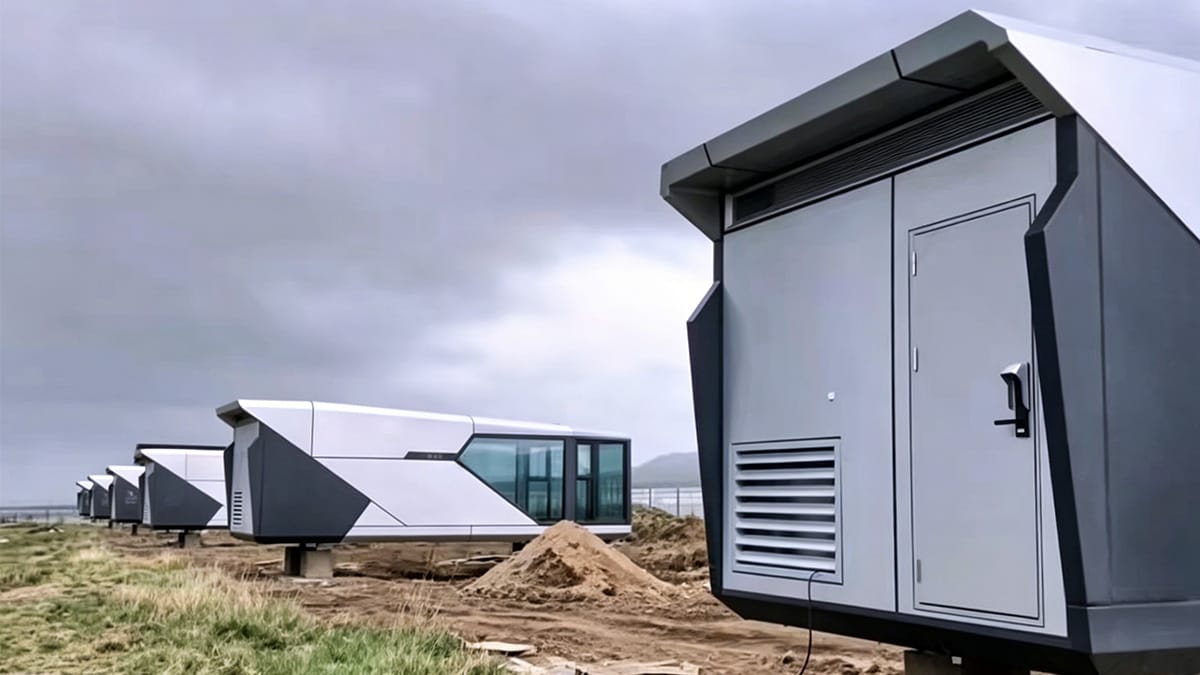
You need to pick the best way to ship your capsule house. Sea shipping works well for places like Europe, the Americas, Southeast Asia, and Australia. Land and rail shipping are good for countries inside continents, like Russia and Azerbaijan. You can ship a finished building or send it in parts. Finished buildings cost more to ship but are ready to use. Modular shipments cost less and are good for big orders, but you must build them at the site.
Shipping Method | Suitable Regions | Description |
|---|---|---|
Land and Rail Transportation | Inland countries (e.g., Russia, Azerbaijan) | Used for countries where sea transport is less feasible due to geography. |
Sea Transportation | Europe, Americas, Southeast Asia, Australia | Commonly used for shipping to these regions. |
Assemble Shipment | Various models (e.g., A1, A9) | Fully completed houses shipped in 40HQ or flat rack containers, allowing for straightforward installation. |
Disassemble Shipment | Models with width of 3m or 3.2m (e.g., E6, E8) | 70-80% pre-fabricated at the factory, reducing shipping costs by using 40HQ containers. |
Tip: Always get marine cargo insurance. ICC A covers theft, storms, and water damage. ICC B and ICC C cover less. Builder’s risk insurance protects your house while it is being built. General liability insurance covers injuries or legal problems.
Handle Customs Procedures
You must get the right papers for customs. In the United Kingdom, you need a bill of lading, a commercial invoice, and a certificate of origin. These papers show who owns the house, its value, and where it was made.
Document Type | Description |
|---|---|
Bill of Lading | A document issued by a carrier to acknowledge receipt of cargo for shipment. |
Commercial Invoice | A document that itemizes and records the transaction between the buyer and seller. |
Certificate of Origin | A document that certifies the country of origin of the goods being shipped. |
Customs can be hard. Language and culture differences may cause confusion. Quality control matters because your house must meet local rules. Shipping and logistics can make things tricky. You can hire a customs broker to help with papers and avoid delays.
Arrange Installation
After your house arrives, you need to plan how to set it up. Finished buildings can be used right away. Modular shipments need experts to build them. Work with a trucking company to pick up the house from the port. Prepare the site with a strong, flat concrete pad. Connect water, power, and sewage.
Delivery Option | Advantages | Disadvantages |
|---|---|---|
Finished Building Transportation | Can be used directly after delivery without complicated assembly. | High transportation costs due to the need for a 40-foot frame container. |
Modular Transportation for Disassembly | Reduces transportation expenses, suitable for bulk purchases. | Requires professional assembly on-site, which may affect quality if not handled properly. |
Arrange local trucking and crane services (at least 25-ton capacity) for unloading.
Connect utilities so the house is ready to live in.
Make sure there is good drainage with the right slope.
Note: Careful planning for shipping, customs, and installation helps you avoid mistakes when importing capsule houses from China.
You can do well when importing capsule houses from China if you follow easy steps. First, look for good suppliers and check their background. Use a four-step plan to write down what you need, pick a few suppliers, check the quality, and plan how to ship. Make sure your house follows customs rules and local building laws. Keep your money safe by using secure payments and having the right papers.
If you plan carefully and check quality, you will not make expensive mistakes.
Link | |
|---|---|
Phone | +8617610607918 |
[info@volferda.com](https://www.volferda.com/- info@volferda.com) |
FAQ
What documents do you need to import a capsule house?
You need a bill of lading, a commercial invoice, and a certificate of origin. Customs might also want to see compliance certificates. Always ask your local customs office if you need more documents.
How long does shipping from China usually take?
Sea shipping takes about 4 to 8 weeks. Land or rail shipping takes about 2 to 4 weeks. Bad weather or customs checks can slow things down.
Tip: Ask your supplier to give you tracking updates while your house ships.
Can you customize the capsule house design?
Yes, most suppliers let you change the design. You can pick colors, layouts, and features. Write down what you want before you ask for changes.
What should you check before installation?
Item | Why It Matters |
|---|---|
Site foundation | It holds up the house |
Utility connections | Gives water and power |
Crane access | Needed for unloading |
Check these things so you do not have delays or problems.