

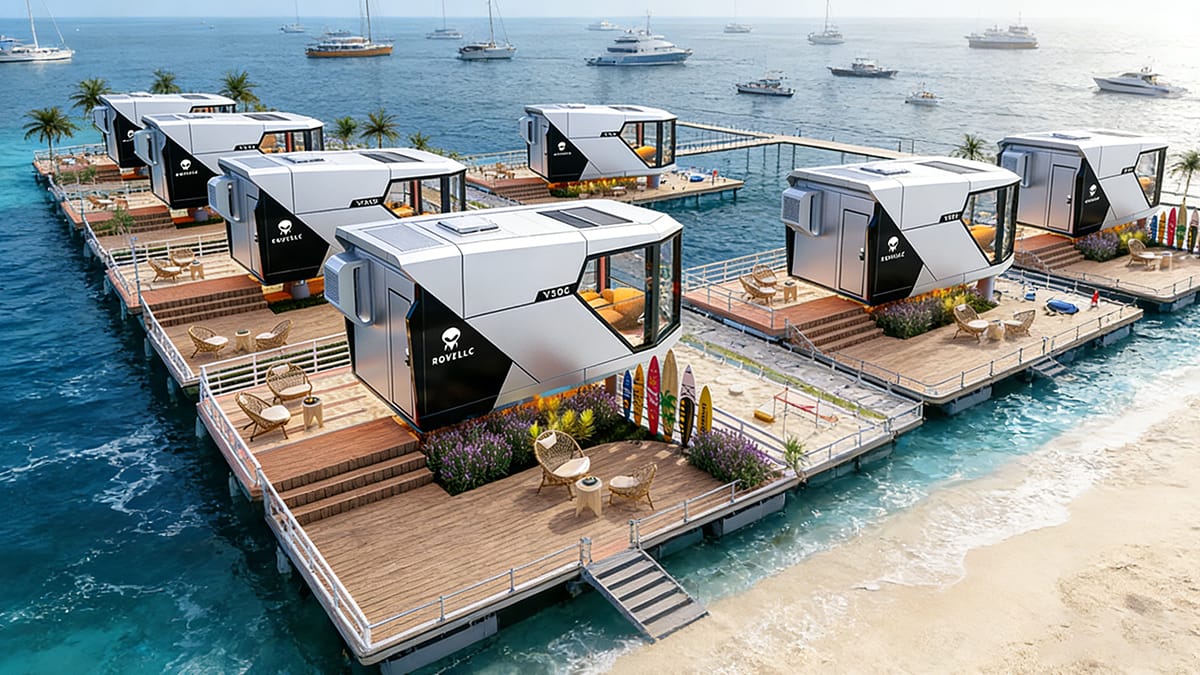
04 May Capsule Home or Modular House Which Is Right for You in 2026
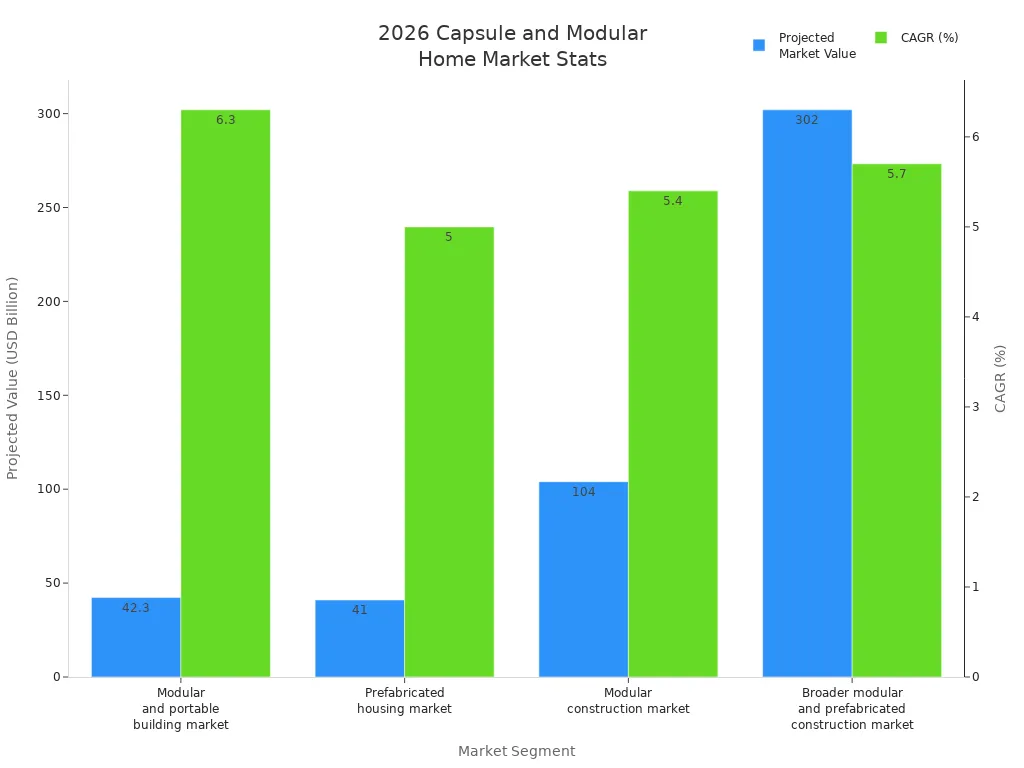
You may ask if a capsule home or modular house is right for you. A capsule home is small and easy to move. Modular houses have more space and can change easily. Many young people, like millennials and Gen Z, pick capsule homes. They want cheap and simple places to live. These homes work well in cities where housing costs are high. Modular homes are good for people who need more room and choices. Look at the chart below to see how these homes are growing in the market.
Key Takeaways
Capsule homes do not cost much money. They are great for one person or two people who want a simple life in the city.
Modular houses give you more room and let you change things. This makes them good for families or people who want to stay for a long time.
Capsule homes are simple to move. You can set them up fast. They are good for people who move a lot.
Both types of homes are good for the environment. Capsule homes save more energy because they are smaller.
Think about how you live, how much money you have, and your plans for the future before you pick a capsule home or a modular house.
Structure & Design
Capsule houses are small and have a modern look. They use strong aluminum and steel. This makes them light and tough. Modular homes are bigger and can change shape. You can pick different finishes and layouts. Both types look modern, but capsule houses are simple and efficient.
Cost & Affordability
Capsule houses cost less to buy and build. They use fewer materials and are cheaper for singles or couples. Modular homes cost more because they are bigger. You pay more at first, but you get more space. If you want to save money, capsule houses are the best choice.
Mobility & Installation
Capsule houses are easy to move. You can set them up fast. This is good if you need to move often. Modular homes stay in one place. They take longer to build and are hard to move. If you want a home that moves with you, capsule houses are better.
Comfort & Space
Capsule houses have small spaces. They use space well for sleeping and cooking. They are best for one or two people or short stays. Modular homes have more room and comfort. You can have separate rooms and more privacy. Families should pick modular homes for more space.
Durability & Weather Resistance
Capsule houses use strong aluminum and steel. They can handle storms and earthquakes. This makes them very tough. Modular homes are also strong, but it depends on how they are built. If you want a home that lasts in bad weather, capsule houses are best.
Sustainability & Energy Use
Capsule houses use eco-friendly materials. Many have solar panels and good insulation. Some use rainwater systems. These features help save energy and lower pollution. Modular homes can be green too, but bigger homes use more energy. Capsule houses make it easier to live in a green way.
Customization
Capsule houses have standard features and some add-ons. You can add kitchens or parking spaces. Customization costs are low, between 5% and 8%. Modular homes let you pick more options. You can use design tools to plan your space. You can upgrade your home in steps. If you want to change your home a lot, modular homes give more choices.
Capsule Home Features & Use Cases
 What Is a Capsule Home?
 What Is a Capsule Home?
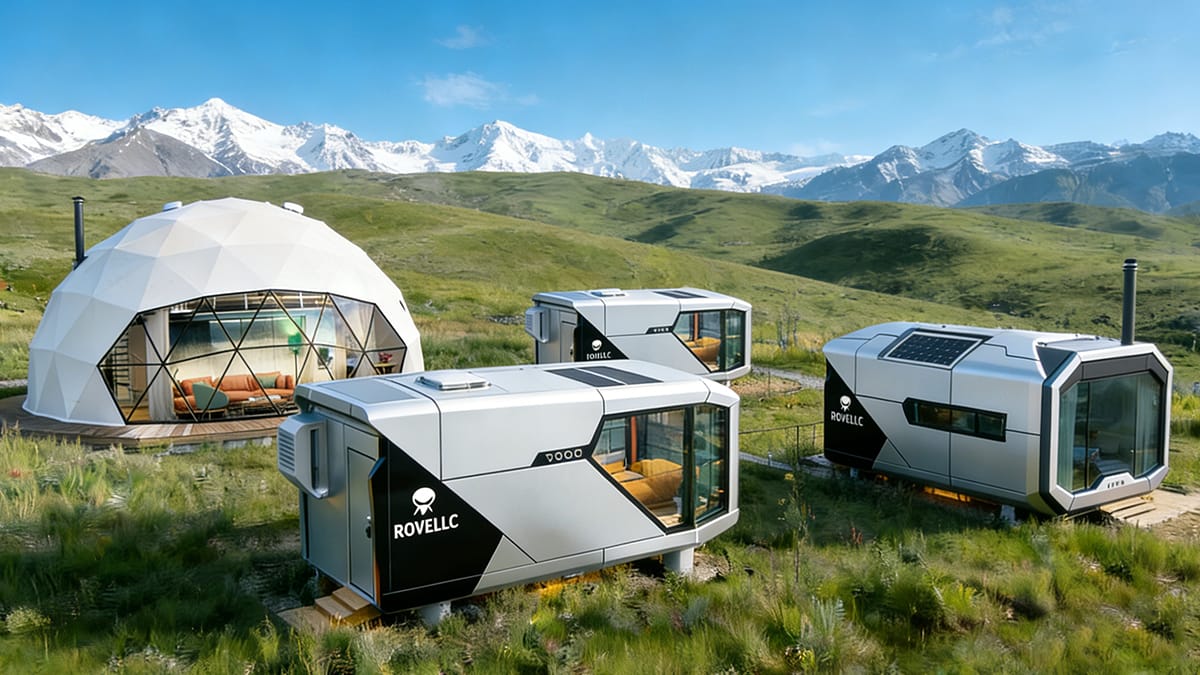
You might ask how capsule houses are not like other small homes. Capsule houses are new kinds of homes that use smart building ideas. They make every part of the space useful, so even small homes feel bigger. The housing industry says a capsule is a small, all-in-one place to live. Most capsule homes are between 75 and 400 square feet. You get everything you need for daily life in one unit. These homes are made for comfort and to work well for one or two people.
Main Features of Capsule Homes
Capsule houses are special because they mix strength, speed, and new technology. You can see the main features in the table below:
Feature | Description |
|---|---|
Durability and Lifespan | Capsule houses use strong aluminum and steel. They can last more than 50 years. |
Weather Resilience | These homes can handle strong winds and earthquakes. You can live in many places and feel safe. |
Installation Speed | Capsule homes come almost ready to use. You can set one up in just one day. |
Energy Efficiency | Good insulation and energy systems make them use less energy than normal homes. |
Smart Technology | Each capsule has smart home tools, sound blocking, and modern things for comfort. |
Capsule houses use small spaces to save room and energy. You can move them easily, so they fit your needs if you move a lot. Many people pick capsule homes because they are good for the earth and easy to set up fast.
Typical Capsule Home Uses
Capsule houses are good for many uses. You can see some common uses in the table below:
Use Case | Description |
|---|---|
Residential Solutions | You can use capsule houses as extra homes, guest rooms, or short-term places to stay. They have modern things you need. |
Commercial & Development | Builders use capsule homes for small home villages and places to rent. |
Specialized Needs | Capsule homes are good for living off-grid, working far away, or for emergencies. |
Tourism & Hospitality | Hotels and resorts use capsule homes for special guest rooms. |
Temporary & Workforce Housing | Capsule houses help with places for workers, disaster help, and living at building sites. |
Remote Living & Offices | People who travel for work use capsule homes as offices or homes away from cities. |
Tip: If you want a home that saves energy, is easy to move, and does not take up much space, a capsule house could be right for you.
Modular House Guide
What Is a Modular House?
You might ask how modular houses are not like other homes. Modular houses are made in pieces inside a factory. Workers bring these pieces to your land and put them together fast. This way of building is called modular construction. You get a house that looks like a normal home, but it is built quicker and can cost less.
Key Features of Modular Homes
There are many things that make modular homes special. Here are some important ones:
Engineers plan each step to keep your home safe and strong.
Factories build the parts inside, so there is less waste and better quality.
Each piece fits on regular trucks, so moving them is easy.
Workers put your home together in just a few days, with little mess or noise.
Some modular homes can move if you need to live somewhere else.
You get your home faster than with old ways of building.
The process saves money by making less waste and keeping workers safe.
These things help you get a home that works well and lasts a long time.
Common Modular House Uses
You can use modular homes in lots of ways. The table below shows some common uses and why people pick them:
Use Type | Description |
|---|---|
Modular homes help more people buy homes because they cost less. | |
Construction Speed | Builders finish these homes 30–50% faster, which is great for city projects. |
Customization | Many buyers want special layouts and finishes, and modular homes offer these choices. |
Multigenerational Living | Families use modular homes to live together in one place, with space for everyone. |
Urban Housing Projects | Cities use modular homes to solve housing shortages quickly and efficiently. |
Tip: If you want a home that is quick to build, easy to change, and good for families, modular homes are a smart pick.
Tiny Homes vs Capsule Houses
Space & Comfort
 Space & Comfort
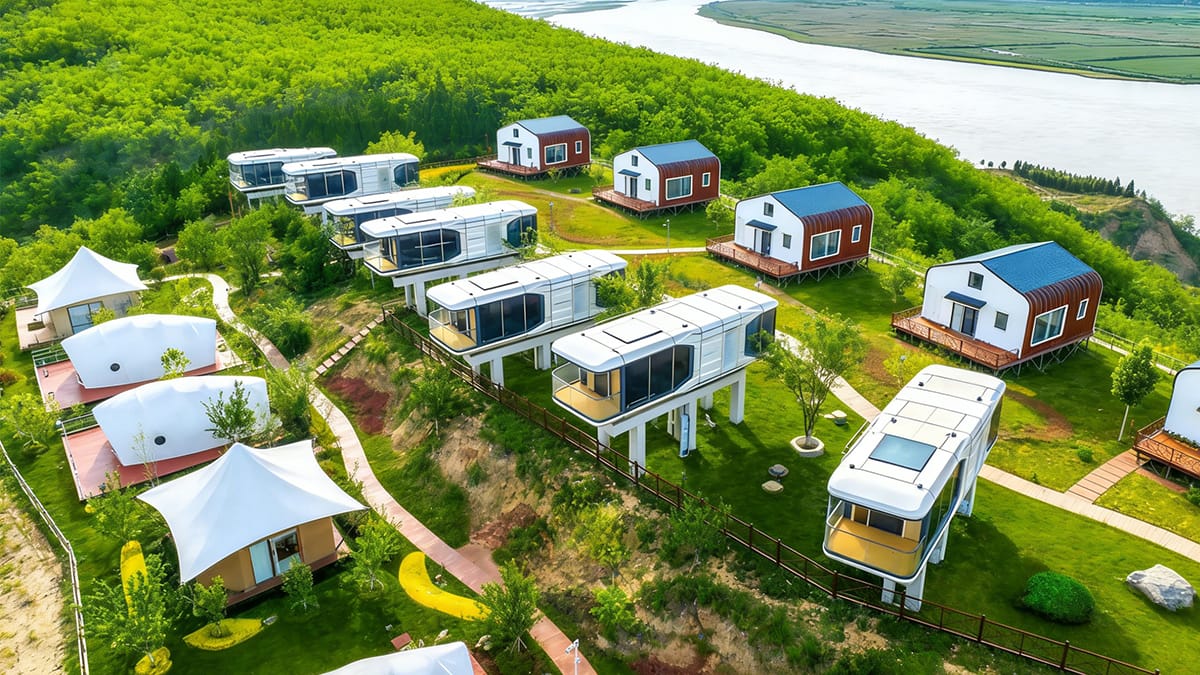
You might wonder how tiny homes and capsule houses are different for daily life. Tiny homes give you more room. Most tiny homes are between 100 and 400 square feet. Capsule houses are smaller, usually 50 to 100 square feet. Tiny homes let you have a couch, bed, and a small kitchen. You get more comfort in a tiny home. Capsule houses use every bit of space well. They do not waste any space. Capsule houses are good if you want a simple life or live in a city. Tiny homes are better if you want more space to relax for a long time.
Feature | Capsule Houses | Tiny Homes |
|---|---|---|
Size | 50 to 100 square feet | 100 to 400 square feet |
Space Efficiency | Superior, maximizes limited space | Less efficient, potential unused areas |
Comfort | Minimalist, functional | More spacious, higher comfort levels |
Urban Suitability | Ideal for city living | May not be as space-efficient |
Maintenance Costs | Lower due to compact design | Higher due to larger size |
Durability & Longevity
You want your home to last a long time. Capsule houses use strong aluminum and steel. They can last 50 years or more. Tiny homes last about 20 to 30 years. Capsule houses are better if you want a home that stays strong. Tiny homes may need more repairs as they get older.
Capsule houses can last 50 years or more.
Tiny homes usually last 20 to 30 years.
Mobility & Installation
Moving your home is important if you travel a lot. Capsule houses are easy to move. You can set them up fast, sometimes in one day. Tiny homes can move too, but they need a trailer or special papers. Capsule houses work well in RV parks or as small homes. Tiny homes may need a strong base, so moving them is harder.
Feature | Capsule Houses (RV Classification) | Tiny Homes (Permanent Home Classification) |
|---|---|---|
Foundation | Wheels / Chassis | Concrete Slab / Pier |
Zoning | RV Parks / Commercial | Residential Zones |
Permit Difficulty | Low | High |
Cost & Affordability
You might care about how much these homes cost. Capsule houses have a set price, from $15,000 to $30,000. Tiny homes can cost less if you build them yourself. Custom tiny homes can cost $80,000 or more. Capsule houses save you money on repairs and energy bills. Tiny homes cost more if you want special features or more space.
Type of Home | Cost Range |
|---|---|
Capsule Houses | $15,000 – $30,000 (entry-level) |
Tiny Homes | Under $20,000 (DIY) to $80,000 – $120,000 (custom-built) |
Note: Capsule houses are often stronger and use less energy. Tiny homes give you more space for living longer. Pick the one that fits your needs for moving, comfort, and money.
Sustainability & Energy Efficiency
Capsule Home Sustainability
 Capsule Home Sustainability
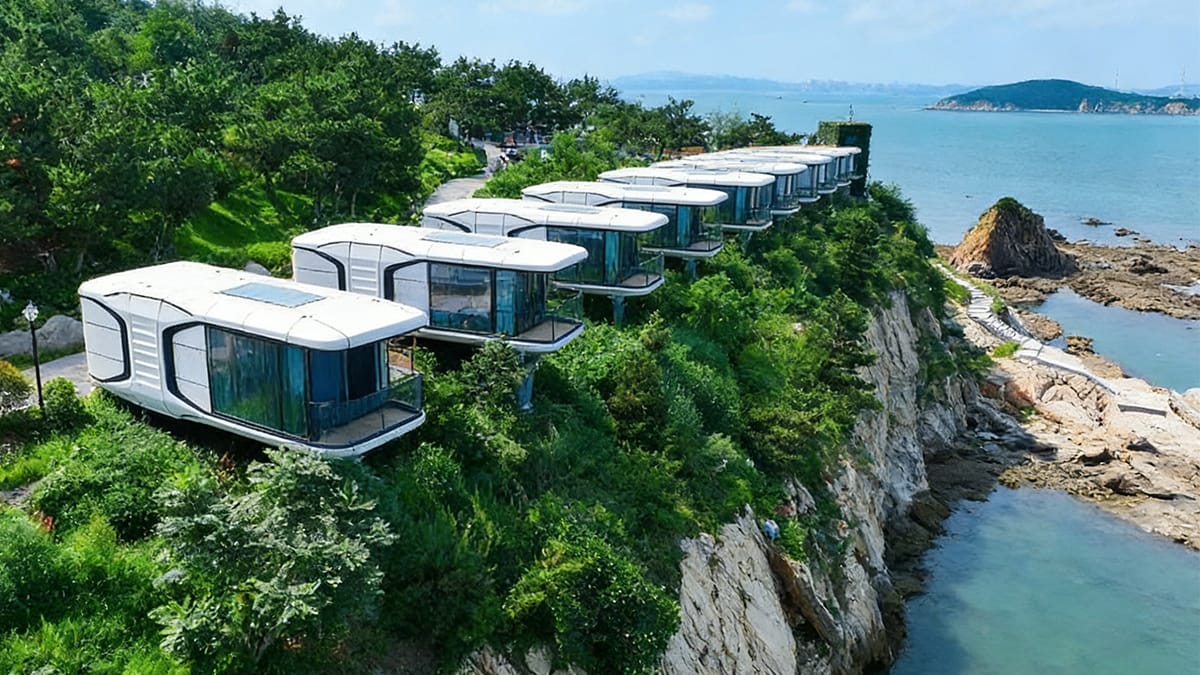
Capsule homes are made to be good for the earth. Builders use safe materials that do not harm people or nature. These homes give you a healthy place to live. They have smart insulation and tight seals. This helps keep energy use low. Capsule homes use about 65% less energy than normal houses. You pay less for energy and help the planet. These homes also keep dirty air outside. You get cleaner air inside your home. Here is a table with some special features:
Feature | Description |
|---|---|
Eco-Friendly Construction | Uses materials free from pollutants for sustainable living |
Energy Efficiency | 65% more energy-efficient than traditional homes |
Air Tightness | High air tightness keeps indoor air clean and boosts efficiency |
Modular House Sustainability
Modular houses are also built to help the earth. Builders make less waste when they build these homes. They say modular building cuts waste by over 65%. You can move modular homes and reuse parts. This means less trash goes to landfills. You help lower greenhouse gases by picking modular homes. These homes use energy-saving materials and often have solar panels. You can live off-grid and still be green. Modular houses have up to 36% less carbon over their life. Here are some main points:
Modular building makes less waste and is good for the earth.
You help cut greenhouse gases by 32kg/m².
Modular homes use energy-saving materials and solar power.
Energy Efficiency Comparison
You might ask which home saves more energy. Capsule homes win because they are small and sealed tight. You use less energy to heat and cool them. Modular homes are also efficient, especially with new materials and solar panels. Both types are good for the earth, but capsule homes use less energy. Modular homes give you more room and let you add more green features. Think about how much space and energy savings you want before you choose.
Tip: If you want the best energy savings and to help the earth, capsule homes are a great pick. Modular houses give you more space and are still good for green living.
Who Should Choose Which?
Best for Capsule Home
 Best for Capsule Home
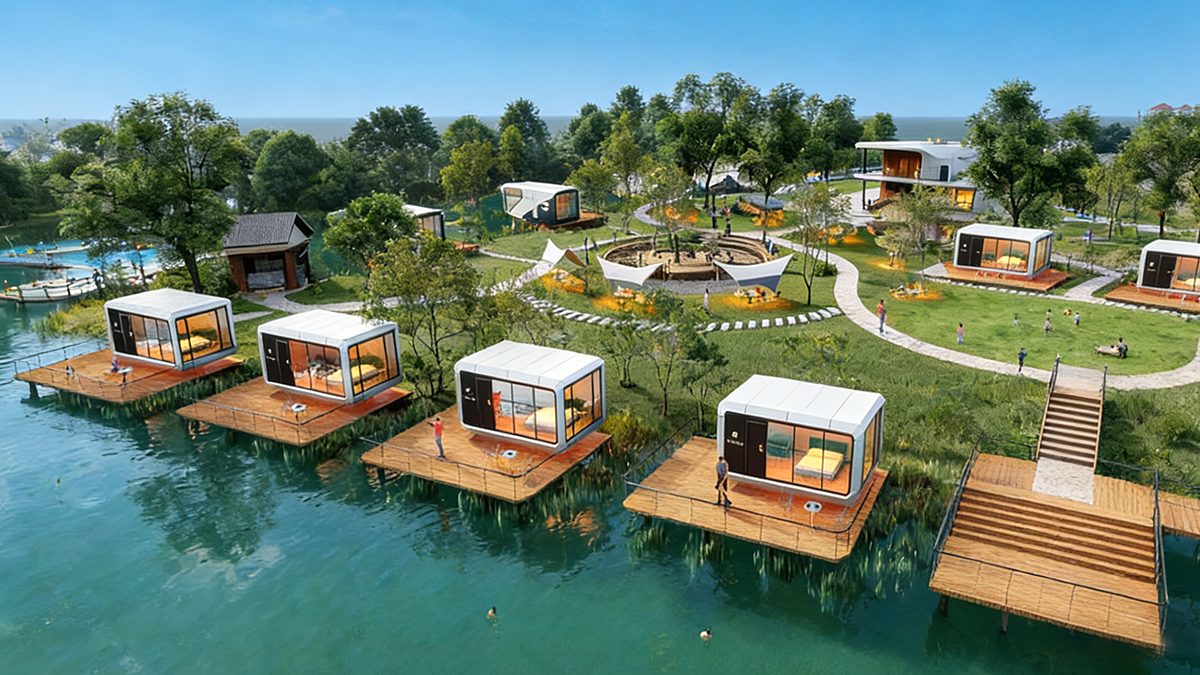
You should consider a capsule home if you want a simple, flexible lifestyle. These homes work well for people who move often or want to live in busy cities. You can set up a capsule home quickly and take it with you if you change jobs or want to try a new place. Capsule homes use strong materials and smart designs, so you get a safe and comfortable space even if it is small.
Capsule homes fit best if you:
Want to save money on housing.
Like to live alone or with one other person.
Need a home that is easy to move.
Care about using less energy and helping the planet.
Prefer a modern look with smart technology.
Want to avoid high repair costs.
Tip: Capsule homes are affordable, usually between $20,000 and $100,000. Remember to plan for extra costs like moving, legal fees, and getting the land ready. Good planning helps you stay within your budget.
You can see some important lifestyle factors in the table below:
Lifestyle Factor | Description |
|---|---|
Design and Layout Preferences | Capsule homes use simple, modern designs with good lighting and eco-friendly materials. |
Sustainability | These homes use green materials and save energy. |
Space Utilization | Foldable furniture and smart layouts make the most of small spaces. |
Technology Integration | Smart home tools help you save energy and make life easier. |
Location | You can place capsule homes in cities or remote areas, depending on your needs. |
Budget Limitations | Capsule homes cost less, but you should plan for all expenses. |
Safety and Durability | Strong materials keep you safe in bad weather. |
Best for Modular House
You should choose a modular house if you want more space and the ability to change your home’s design. Modular houses work well for families or people who want to own land. You can pick different layouts and finishes, so your home fits your style. Modular houses also last a long time and can be built quickly.
Modular houses fit best if you:
Need more space for a family or guests.
Want to own land and build a permanent home.
Like to customize your home’s design and features.
Want a home that is strong and safe.
Care about building quickly and saving on construction time.
Plan to stay in one place for many years.
Here is a table showing what people look for in modular houses:
Priority | Description |
|---|---|
Affordability | Modular houses give you a cost-effective way to own a home, even as prices rise. |
Land Ownership | You can buy land and build your home where you want. |
Customization | You can choose layouts and finishes, but you need to plan for extra costs. |
Note: Modular houses help you build a home that fits your needs now and in the future. You can add rooms or change the layout as your family grows.
Matching Needs to Home Type
You need to think about your daily life, budget, and future plans before you pick a home. Start by asking yourself these questions:
Do you want to move often or stay in one place?
How much space do you need for living, working, and relaxing?
What is your budget for buying and setting up your home?
Do you want to own land or just the home itself?
How important is it for you to use green materials and save energy?
Do you need smart technology in your home?
Will you live alone, with a partner, or with a family?
You can use a simple plan to match your needs to the right home type:
Write down what you need for moving, space, and comfort.
Think about how these needs affect your choice of home.
Make a list of what support or features you need, like smart tools or easy setup.
Callout: If you want a home that moves with you, saves energy, and costs less, a capsule home is a smart choice. If you want more space, the chance to own land, and the ability to change your home over time, a modular house will fit you better.
Choosing between capsule homes and modular houses depends on your lifestyle, budget, and long-term goals. Take time to think about what matters most to you. This way, you can find a home that matches your life and helps you feel comfortable and secure.
You now know the main differences between capsule homes and modular houses. Before you decide, think about these important factors:
Do you need a long-term or temporary home?
How much space do you want for quiet or social time?
What is your budget and where do you want to live?
Do you want a home that is eco-friendly or easy to customize?
Next, follow these steps:
Check local zoning rules and permits.
Prepare your site and set up utilities.
Find a trusted seller and plan your budget.
Tip: Visit model homes to see which style fits your life best.
FAQ
What is the main difference between a capsule home and a modular house?
You will find that capsule homes are smaller and easier to move. Modular houses give you more space and let you customize the design. Capsule homes suit simple, mobile living. Modular houses work better for families or those who want more room.
Can you live in a capsule home year-round?
Yes, you can live in a capsule home all year. Builders use strong materials and good insulation. You stay warm in winter and cool in summer. Capsule homes work well in many climates.
How long does it take to set up a modular house?
You can set up a modular house in a few weeks. Factory-built parts arrive ready to assemble. Workers put them together quickly. This process saves you time compared to traditional building.
Are capsule homes legal everywhere?
No, capsule homes are not legal in every place. You must check local zoning laws and building codes. Some cities allow them in RV parks or as accessory units. Always ask your local office before you buy.
What are the main costs to consider for each home type?
You should plan for the purchase price, land, permits, and utility setup. Capsule homes cost less to buy and move. Modular houses cost more but give you extra space and features. Always include hidden costs in your budget.